
CAPE Portal Live: How to File for Your IEEPA Tariff Refund
U.S. Customs and Border Protection launched the CAPE portal at 8 AM EDT on April 20, 2026. CAPE stands for Consolidated Administration and Processing of Entries. It is the system importers must use to claim refunds of IEEPA tariffs ruled unlawful by the Supreme Court in February 2026.
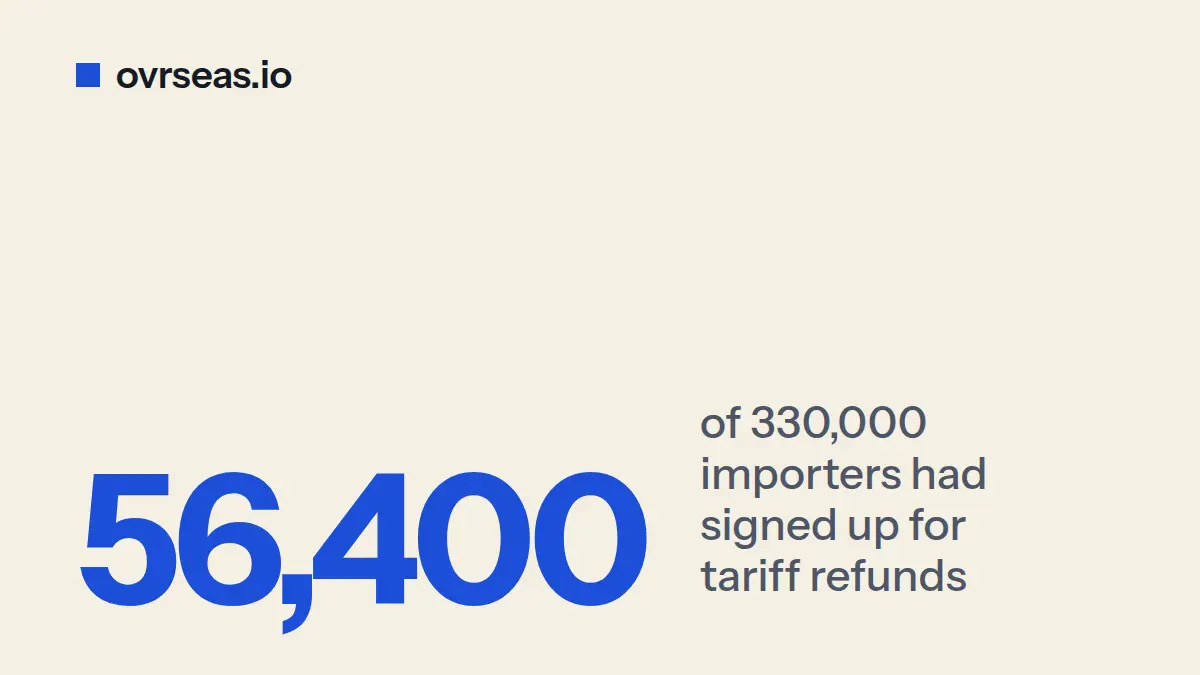
Here is the catch. Of the more than 330,000 importers who paid IEEPA duties, only about 56,400 had completed ACH refund registration by April 9, 2026. The rest cannot receive a refund yet, even if their entries qualify. This guide explains what CAPE covers, who can file, and what to do today.
What is CAPE and when did it launch?
CAPE is a new tool inside the Automated Commercial Environment (ACE) Portal. It went live at 8 AM EDT on April 20, 2026. According to CBP, CAPE consolidates IEEPA refund requests so they are processed in bulk rather than one entry at a time.
The launch follows the Supreme Court ruling on February 20, 2026 in Learning Resources, Inc. v. Trump. That ruling held that IEEPA does not authorize the President to impose tariffs. The U.S. Court of International Trade then ordered CBP to refund the duties.
CBP has reported that approximately $166 billion in IEEPA duties were collected across more than 53 million entries from over 330,000 importers. Phase 1 of CAPE can process about 82% of those entries, worth roughly $127 billion.
Why do most importers risk missing their IEEPA refund?
The refund is not automatic. Importers must take action. As of April 9, 2026, only 56,400 of the 330,000 importers who paid IEEPA duties had completed the steps required to receive a refund. The other importers will not see any money until they register.
To use CAPE, you need three things in place:
An ACE Portal account with the Importer sub-account view
ACH refund bank information added to the account (this is separate from your duty payment account)
A list of entries with IEEPA HTSUS Chapter 99 codes
If any of these are missing, your CAPE Declaration will not be processed and you will not receive your refund.
What entries qualify for Phase 1 of CAPE?
Phase 1 of CAPE covers two narrow categories. According to CBP, these are unliquidated entries and entries that are within 80 days of their liquidation date as of the submission date.
The 80-day window exists because CBP has a 90-day voluntary reliquidation period under 19 U.S.C. § 1501. Phase 1 is designed to fit inside that window.
Several entry types are not eligible for Phase 1:
Entries flagged for reconciliation (Type 09)
Entries that are part of a drawback claim
Entries covered by an open or suspended protest
Entries more than 80 days past liquidation
Entries where a surety paid the IEEPA duties
USMCA Duty Deferral (Type 08) and Temporary Importation Under Bond entries
CBP has said additional phases will handle these excluded categories. There is no published date for Phase 2 yet.
How do you file a CAPE Declaration?
The CAPE Declaration is a CSV file uploaded through a new tab in the ACE Portal. Each declaration can contain up to 9,999 entry numbers. You can submit multiple declarations if you have more entries.
The filing flow has four steps:
Submit: The Importer of Record (IOR) or the broker who filed the entry uploads the CSV.
Validate: ACE checks the file format and confirms each entry exists and contains an IEEPA Chapter 99 code.
Process: ACE removes the IEEPA Chapter 99 lines and recalculates duties owed.
Refund: CBP liquidates or reliquidates the entries and issues a consolidated refund via ACH, with statutory interest.
CBP expects to issue valid refunds within 60 to 90 days of accepting the declaration. Refunds are paid only by ACH. If your bank information is missing, payment is delayed until you provide it.
One important rule: once a CAPE Declaration is accepted, it cannot be amended. New eligible entries must go on a new declaration. Each entry can appear on only one accepted declaration.
What if your entries are outside Phase 1?
About 18% of IEEPA-affected entries are outside Phase 1. These include finally liquidated entries past the 80-day window, reconciliation entries, drawback entries, and others noted above.
For these entries, CBP plans to add functionality in later phases. There is no published timeline. The Court of International Trade has confirmed refunds are owed for finally liquidated entries, but Phase 1 will not process them.
If your entries are outside Phase 1, you can still take preparation steps now: confirm ACE Portal access, complete ACH refund enrollment, and identify eligible entries by their Chapter 99 codes. When later phases launch, you will be ready.
What to do today: a checklist
Confirm you have an ACE Portal account with the Importer sub-account view.
If you do not have an ACE account, apply now. CBP is taking about a month to approve new accounts.
Add ACH refund bank information to your ACE account. This is a separate setup from your duty payment account.
Pull a list of your entries that contain IEEPA HTSUS Chapter 99 codes from February 4, 2025 through February 24, 2026.
Check the liquidation status of each entry. Phase 1 covers unliquidated entries and entries within 80 days of liquidation.
Decide whether you or your broker will file the CAPE Declaration on your behalf.
Prepare the CSV file and submit through the new CAPE tab in the ACE Portal.
The portal is live. The system is ready. The only thing standing between most importers and their refund is the registration steps that CBP requires.
Make the invoice and packing list match
Enter the shipment once. Quantities, packages and weights come out the same on the commercial invoice and packing list, with the fields customs asks for.
No credit card required · 14-day free trial

Related Articles
CBP's Rail Export Manifest Rule: What Has to Be Right 24 Hours Before Departure
CBP's final rule for rail export manifests takes effect 26 October 2026. The initial filing is due 24 hours before departure, and six of its seven mandatory fields come off your own shipment documents.

How to Find the Right HS Code for Your Product
HS code lookup is not a Google search. It is a legal classification under six binding rules. Here is the workflow professionals use.
Freight Forwarder vs Customs Broker: Who Does What
Freight forwarders move cargo. Customs brokers clear it. Since 2022, US importers must sign the Power of Attorney directly with their broker.