
Bill of Lading Consignee: Straight vs To Order
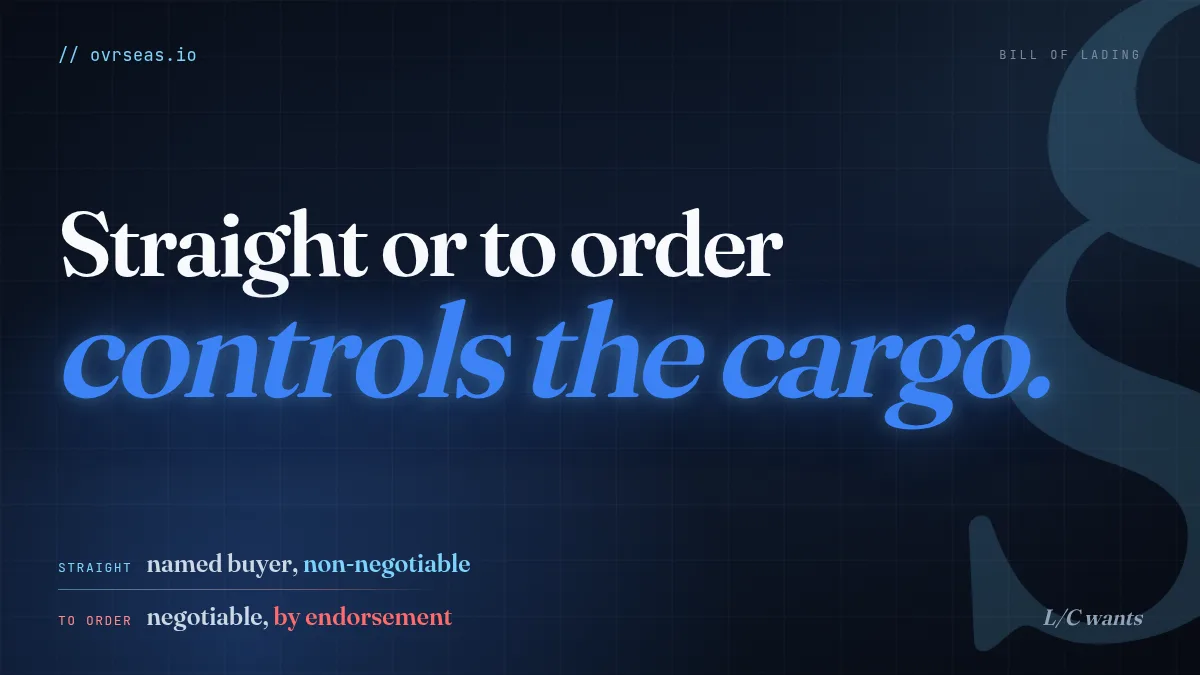
The consignee box on a bill of lading is not an address field. It decides who can legally claim your cargo at the port of discharge, and whether you can sign that right over to anyone else. Name the buyer directly and you create a straight (non-negotiable) bill of lading: title runs to that one name. Write "to order" and you create a negotiable bill that moves by endorsement — which is exactly why a letter of credit usually asks for "to order of the issuing bank." This guide explains the difference, why it controls whether you get paid, what U.S. law changes for straight bills, and what to type in the box when you ship under a credit.
What does the consignee box on a bill of lading actually do?
The consignee is the party entitled to take delivery of the goods from the carrier. On a negotiable bill, the box also fixes how the right to the cargo can change hands while the goods are still at sea. So the wording you choose is a control over the cargo, not a mailing label. Get it wrong on a letter-of-credit shipment and the bank can reject the documents, or the buyer can collect the goods before paying.
There are two basic ways to fill it: a named consignee (a straight bill) or "to order" of someone (a negotiable bill). The two behave very differently.
Straight bill vs to order bill of lading: what is the difference?
A straight bill of lading names a specific consignee and is non-negotiable. According to P&I insurer NorthStandard, the consignee on a straight bill is named when the bill is issued and cannot later be changed, so the shipper cannot transfer legal title to a third party by endorsing the bill. Title runs to that name and stops there.
A "to order" bill of lading consigns the goods to the order of a named party — for example "to order of [shipper]" or "to order of [bank]." It is negotiable: the right to the cargo moves by endorsement on the back of the bill while the goods are in transit. That single feature is what makes a bill of lading usable as security for payment.
- Straight (named consignee): non-negotiable, title to one named party, cannot be signed over.
- To order: negotiable, title moves by endorsement, can be used as collateral.
- To order of issuing bank: the negotiable form a letter of credit typically requires.
Why does a letter of credit want "to order of the issuing bank"?
Under a documentary credit, the bank pays against documents and treats the bill of lading as its security for that money. A negotiable bill consigned "to order of the issuing bank" lets the bank hold title to the cargo until the buyer pays or accepts. Once paid, the bank endorses the bill over to the buyer, who can then collect the goods. The negotiability is the whole point: it keeps the cargo as collateral in the bank's hands.
This is also a common discrepancy. If your credit calls for a bill "to order of issuing bank" and you instead name the buyer as consignee, the descriptions no longer match the credit and the bank can refuse the presentation. The fix is to read the credit's consignee line first and copy that exact wording — the same discipline that keeps your commercial invoice in line with the letter of credit.
What does U.S. law (the Pomerene Act) change for straight bills?
For shipments touching the United States, the federal Bills of Lading Act — the Pomerene Act, codified at 49 U.S.C. §80103 — defines a bill as negotiable when it states that the goods are to be delivered "to the order of" a consignee, and non-negotiable when they are to be delivered to a named consignee. The wording in the box is what the statute keys on.
The practical risk sits with straight bills. Because a straight bill is non-negotiable, P&I insurers such as Gard caution that a carrier may deliver to the named consignee on proof of identity, without always requiring an original bill to be surrendered. In plain terms: name the buyer on a shipment where you have not yet been paid, and the buyer may be able to take the cargo before the money arrives. If payment security matters, that is the outcome the "to order" form is designed to prevent.
What should you put in the consignee box?
Work from the deal, not from habit:
- Paid in advance, or a trusted repeat buyer: a straight bill naming the buyer is often fine and can speed up release. (A sea waybill does the same job without an original to courier.)
- Shipping under a letter of credit: use the exact consignee wording the credit requires — usually "to order of issuing bank." Do not substitute the buyer's name.
- Open account but you want leverage: "to order of shipper," endorsed and released only when you choose, keeps control until you are comfortable.
Whatever the answer, the wording has to be consistent across the set. If the bill says "to order of issuing bank" but another document contradicts it, you are back to a discrepancy. Building every document from one master record — so the consignee, parties and goods read the same on the invoice, packing list and bill of lading — is the simplest way to avoid the mismatch, the same principle behind avoiding a customs hold. Tools like ovrseas generate the bill of lading from that single record, so the consignee you enter once is the consignee every document shows. For the Incoterms side of who arranges carriage, see our Incoterms 2020 guide.
Frequently asked questions
Is a straight bill of lading the same as a sea waybill?
They overlap in effect but are not identical. Both deliver to a named consignee and are non-negotiable, so neither can be endorsed to a third party. A sea waybill is designed to need no original surrendered at destination, which speeds release. A straight bill is still a bill of lading; treat any original carefully, because practice on whether the carrier demands it varies by jurisdiction and carrier.
Can I change the consignee on a straight bill after it is issued?
No. The defining feature of a straight bill is that the consignee is fixed when the bill is issued and cannot be transferred by endorsement. If you need the flexibility to switch who takes delivery, you need a negotiable "to order" bill instead.
What does "to order of issuing bank" mean on a bill of lading?
It means the goods are deliverable to the order of the bank that issued the letter of credit. The bank holds title as security until the buyer pays or accepts, then endorses the bill to the buyer. It is the negotiable form most letters of credit require, so the bank stays in control of the cargo until it is satisfied.
Does a "to order" bill of lading guarantee I get paid?
No. It keeps the cargo as security and stops the buyer from collecting the goods without the endorsed bill, but payment still depends on the credit terms being met and the documents being clean. A negotiable bill is leverage, not a guarantee.

Related Articles
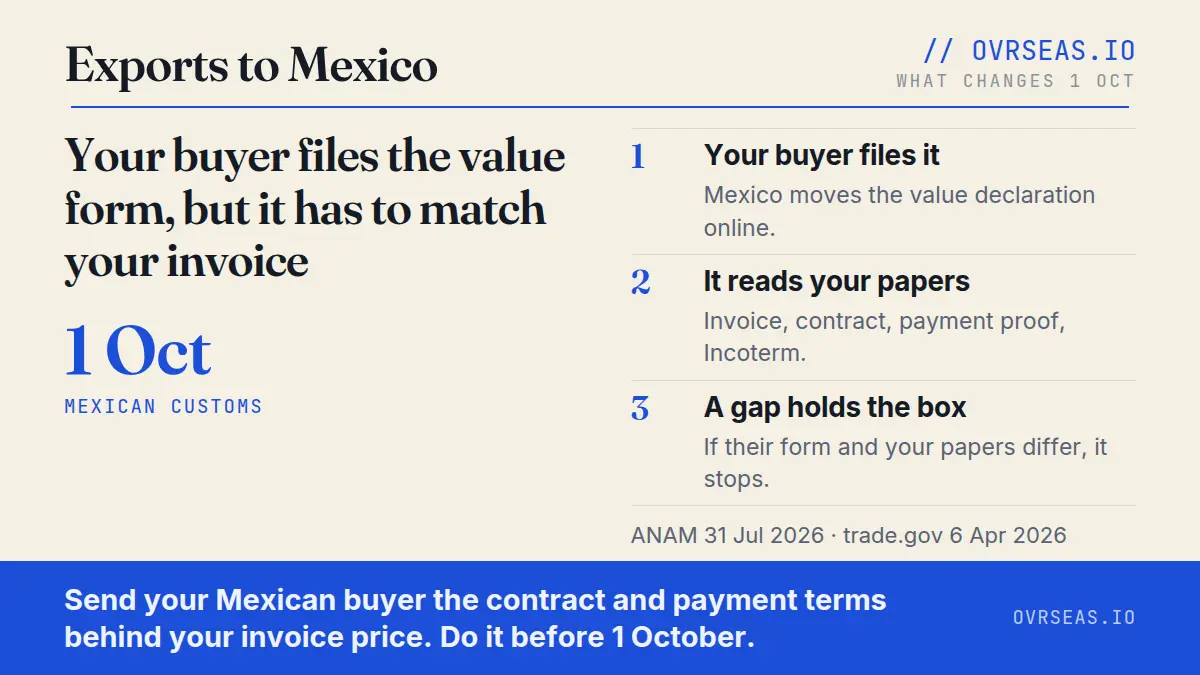
Mexico's Electronic Value Declaration Is Mandatory on 1 October — What Your Buyer Will Need From You
From 1 October 2026 your Mexican buyer files the customs value declaration electronically. Every input to that filing — invoice, contract, payment proof, Incoterm — comes from you.
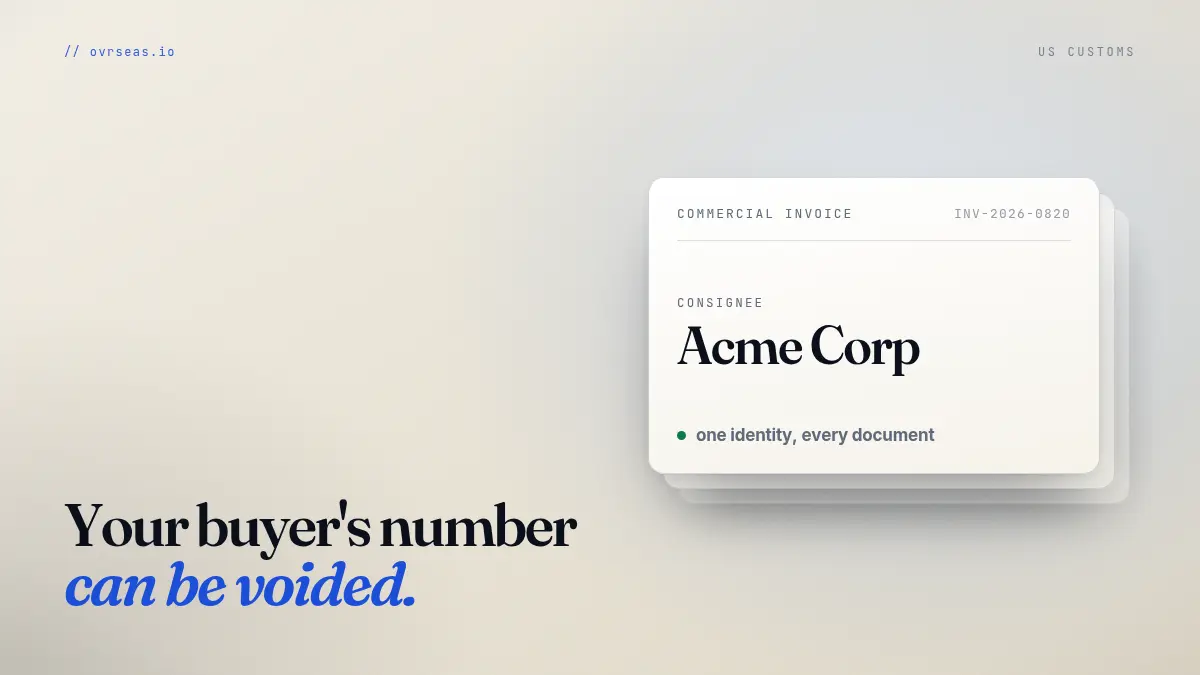
CBP Voids Importer Numbers From 18 September: What Exporters Must Check
From 18 September 2026 CBP will void importer of record numbers whose Form 5106 details are inaccurate. If your buyer's number goes, your container stops — here is what to confirm before then.
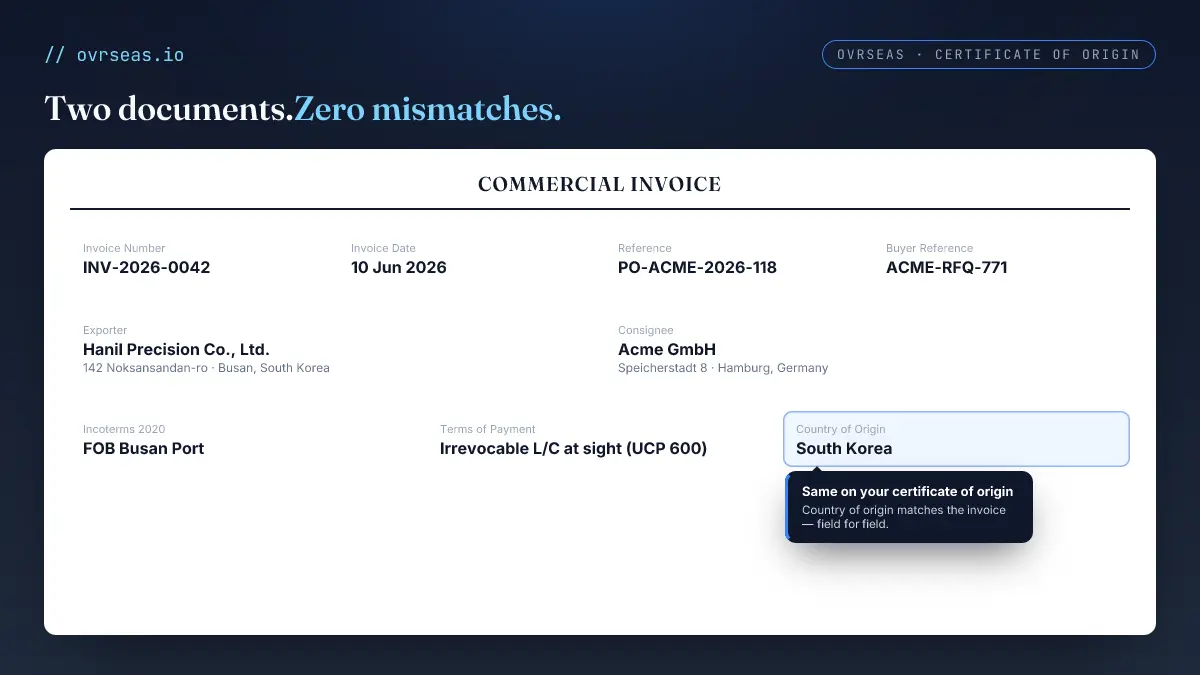
Certificate of Origin + Commercial Invoice: One Master File
Why a certificate of origin and commercial invoice must match — the shared fields, the customs risk, and how one master file keeps them consistent.
Ready to streamline your export documents?
Create Commercial Invoices, Packing Lists, and more in minutes. Enter data once, sync everywhere.
No credit card required · 14-day free trial