
Export License Violations: What U.S. Exporters Must Know
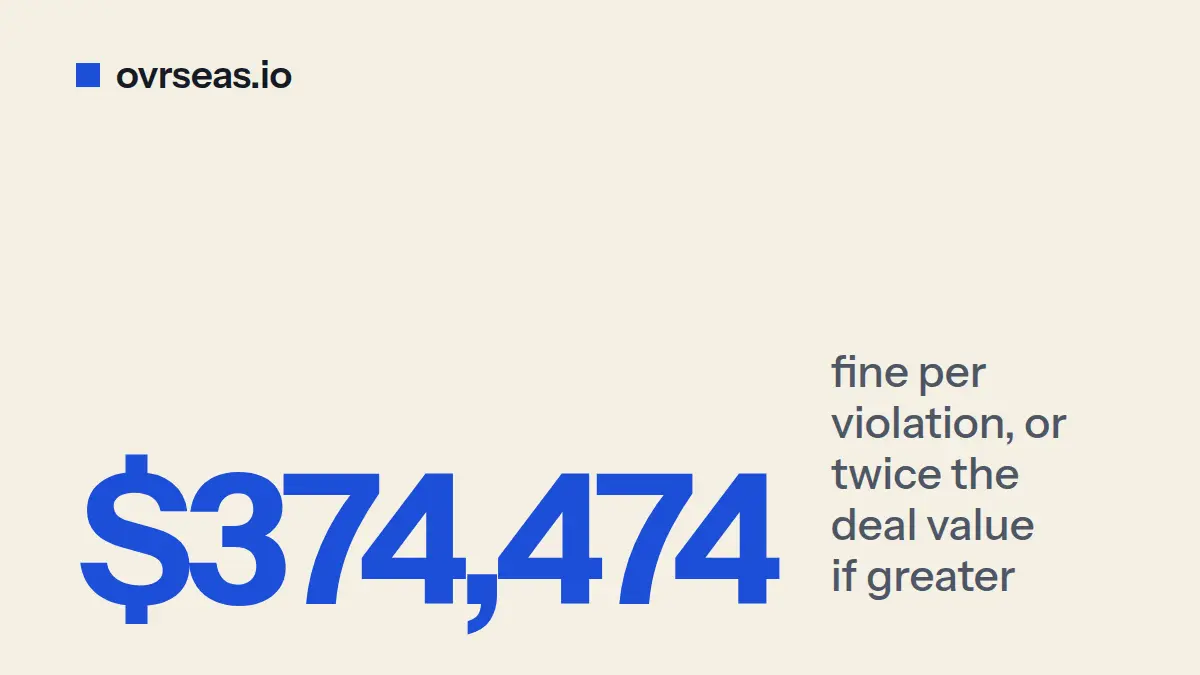
An export license violation happens when a U.S. exporter ships goods, software, or technology without the authorization required under the Export Administration Regulations (EAR). As of January 2025, a single violation can result in an administrative fine of up to $374,474 or twice the transaction value, whichever is greater, according to the Bureau of Industry and Security (BIS). Criminal penalties go further: up to $1 million per violation and 20 years in prison.
Most exporters assume their products don't need a license. And in many cases, that's technically correct. But "no license required" is not the same as "no restrictions." This guide explains what triggers an export license violation, what the penalties look like, and how to stay compliant.
What Is an Export License Violation?
An export license violation occurs when you export, re-export, or transfer an item subject to the EAR without proper authorization from BIS. This includes shipping controlled items without a license, shipping to prohibited end-users or embargoed countries, and filing false or misleading export information. The violation can be civil or criminal depending on whether the exporter acted knowingly.
The EAR, found in 15 CFR §§ 730–774, applies broadly. It covers all items in the United States, all U.S.-origin items regardless of location, and foreign-made items that contain more than a certain percentage of controlled U.S.-origin content. Even re-exports from one foreign country to another can fall under EAR jurisdiction.
The key question is not just "does my product need a license?" It is also "who is the buyer, where are they located, and what will they do with it?"
What Are the Penalties for Violating U.S. Export Controls?
Penalties for export license violations fall into two categories: administrative (civil) and criminal. Administrative penalties can reach $374,474 per violation or twice the value of the transaction, whichever is greater, as of January 15, 2025 (BIS). Criminal penalties under the Export Control Reform Act of 2018 (ECRA) can reach $1 million per violation and up to 20 years imprisonment.
But the financial penalty is often not the worst outcome. BIS can also deny your export privileges. According to BIS, a denial of export privileges prohibits a person from participating in any way in any transaction subject to the EAR. That means you cannot sell, buy, broker, forward, or finance any export covered by the EAR. For many companies, this effectively shuts down international operations.
The penalty amount depends on several factors: the value of the transaction, the harm to national security, whether the violation was voluntary or willful, and whether the company self-disclosed. BIS publishes its penalty guidelines in Supplement No. 1 to Part 766 of the EAR.
Does EAR99 Mean No License Is Ever Required?
No. EAR99 means your product is subject to the EAR but is not listed on the Commerce Control List (CCL). According to the U.S. Department of Commerce, the majority of commercial items fall under EAR99 and generally do not require a license. But there are three exceptions that override this default.
Exception 1: Embargoed or sanctioned countries. Exporting EAR99 items to countries like Cuba, Iran, North Korea, or Syria requires a license. The full list of sanctioned destinations is maintained by BIS and the Office of Foreign Assets Control (OFAC).
Exception 2: Prohibited end-users. If your buyer appears on the Entity List, the Denied Persons List, or the Specially Designated Nationals (SDN) List, you need a license — even for EAR99 items. The Entity List alone includes thousands of organizations across dozens of countries.
Exception 3: Prohibited end-uses. If you know or have reason to know that your product will be used in weapons development, nuclear activities, or other prohibited applications, a license is required regardless of the product's classification.
The common mistake is treating EAR99 as a clearance. It is actually a starting point. The classification tells you the product is low-risk. But the transaction still needs screening.
How Is BIS Enforcing Export Controls?
BIS enforcement has intensified significantly. In 2024, the Disruptive Technology Strike Force — a multi-agency unit led by BIS and the Department of Justice — brought 15 new criminal cases, bringing the total to 26 since the Strike Force was established. These cases involved sanctions violations, smuggling conspiracies, and illegal technology transfers to countries including China, Russia, and Iran.
Notable enforcement actions in recent years include a $5.8 million administrative penalty against TE Connectivity for unauthorized exports of items to parties tied to Chinese military electronics programs (BIS, 2024). In another case, Haas Automation paid over $2.5 million in combined civil penalties to BIS and OFAC for shipping CNC machine parts to Entity-Listed parties in Russia and China.
BIS has also expanded its enforcement infrastructure. In 2024, it hired its first-ever Chief of Corporate Enforcement, expanded the Strike Force to 17 locations, and established the Commerce Screening System to automate screening of foreign entities on all export license applications.
The message is clear: enforcement is not limited to defense contractors or semiconductor companies. Any exporter shipping to the wrong party can face investigation.
How Do You Avoid Export License Violations?
Avoiding violations starts with three screening steps before every shipment. These steps apply whether your product is classified under a specific ECCN or designated EAR99.
Step 1: Classify your product. Determine whether your item has a specific ECCN on the Commerce Control List or falls under EAR99. If it has an ECCN, check the Country Chart in Part 738 of the EAR to see if a license is required for your destination. If you are unsure, you can request a classification from BIS through the SNAP-R system.
Step 2: Screen the parties. Check every buyer, consignee, intermediate consignee, and end-user against the Consolidated Screening List. This free tool from Trade.gov combines multiple U.S. government screening lists into a single search, including the Entity List, Denied Persons List, and SDN List.
Step 3: Evaluate the end-use. If you know or suspect that your product will be used in weapons proliferation, nuclear activities, or other prohibited applications, you must apply for a license — even if the product is EAR99 and the buyer is not on any restricted list.
Beyond these steps, maintain records. U.S. exporters are required to retain export records for five years under the EAR (15 CFR § 762). Having clean documentation can be the difference between a warning letter and a six-figure penalty.
What Should You Do If You Discover a Violation?
If you discover that your company has committed an export violation, the most important step is voluntary self-disclosure (VSD). BIS strongly encourages companies to report violations to the Office of Export Enforcement. According to BIS, voluntary disclosure is a significant mitigating factor when determining penalties.
In practice, companies that self-disclose and cooperate with investigations receive substantially lower penalties than those caught through external reporting or whistleblower tips. BIS has noted that its whistleblower hotline is already an active pipeline for enforcement leads.
A VSD should include a detailed description of the violation, the items involved, the parties, the dates, and any corrective actions already taken. Many companies also engage trade compliance counsel to manage the disclosure process and implement remedial measures.
Waiting is risky. Every day without a disclosure is a day that an employee or third party could report the violation through other channels, eliminating the mitigating benefit of self-disclosure.
Export License Violation Checklist
Classify every product: ECCN or EAR99
Screen all parties against the Consolidated Screening List before every shipment
Check the destination against embargoed and sanctioned country lists
Evaluate whether the end-use is prohibited
Retain all export records for at least five years
If a violation is discovered, file a voluntary self-disclosure with BIS promptly
Train all employees involved in export transactions on EAR basics
Enter a shipment once. Get every document.
Commercial invoice, packing list, certificate of origin and more — filled from one shipment record, so the shared fields always match.
No credit card required · 14-day free trial

Related Articles
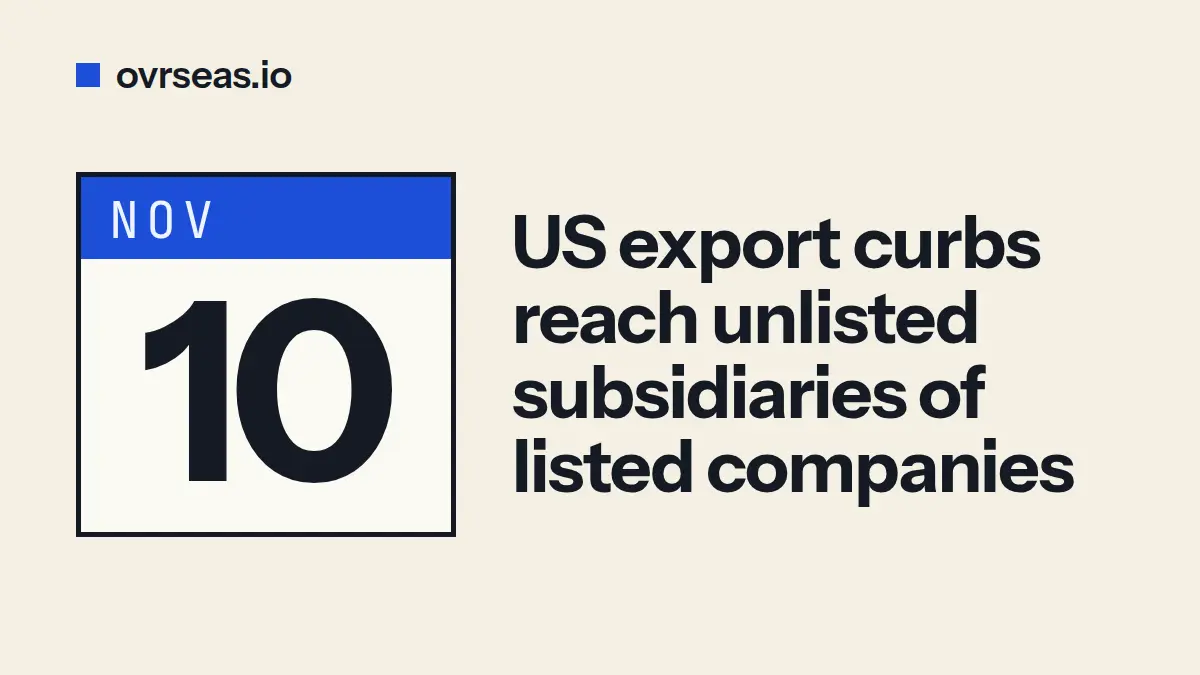
BIS Affiliates Rule 2026: Why CSL Screening Alone Won't Work
The BIS Affiliates Rule snaps back on November 10, 2026. CSL screening alone won't cover 50%-owned affiliates. Here's what changes and what to do.
ECCN Classification: How to Find Your Export Control Number
Wrong ECCN classification can cost $374,474 per violation. Learn how to determine your export control number and avoid BIS penalties.
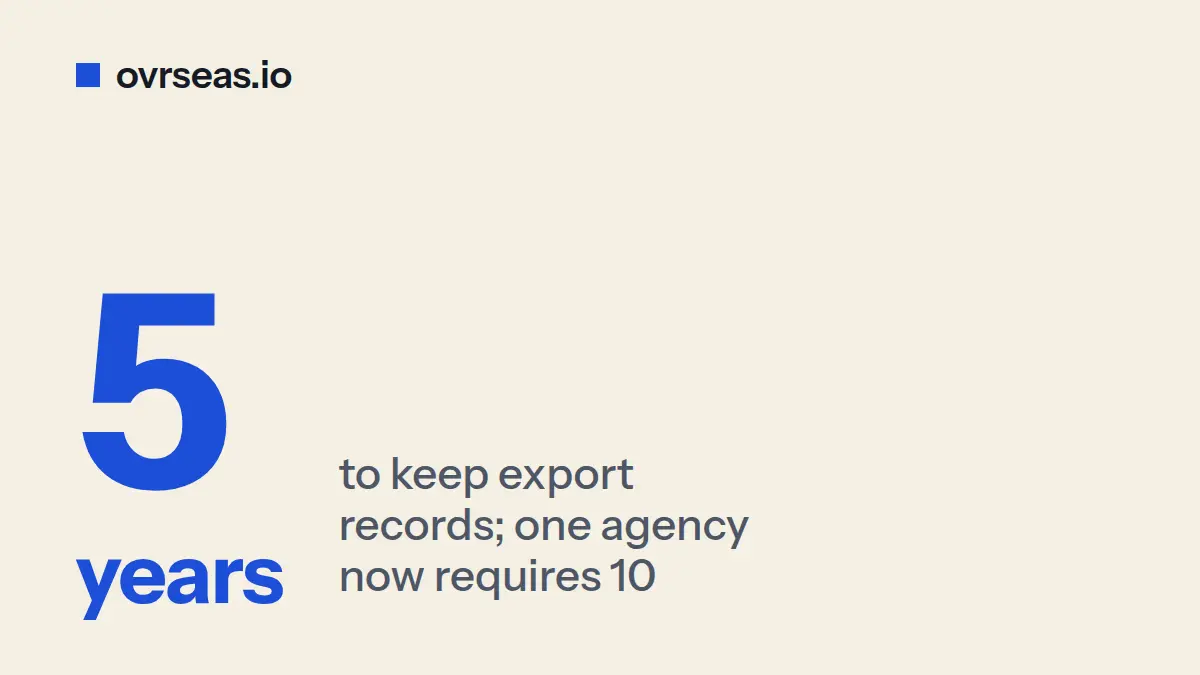
U.S. Export Record Keeping: What to Keep and How Long
U.S. exporters must keep records for 5 years under EAR and FTR. OFAC now requires 10 years. Learn what to retain and the penalties for non-compliance.